
Adult ADHD in Women: Why So Many Canadian Women Are Being Diagnosed in Their 30s and 40s
- May 18
- 11 min read
Key takeaways
In Ontario, ADHD stimulant prescriptions rose 421 percent for women aged 25 to 44 between 2015 and 2023, the steepest increase of any group in the province.
By 2023, more young Canadian women were taking ADHD medication than young men, reversing a decades old gender gap.
Adult ADHD in women is often missed because traditional diagnostic criteria were built around hyperactive boys, not inattentive, masking, high achieving women.
Most women diagnosed in their 30s and 40s did not develop ADHD recently.
They learned to perform around it until life got harder than the performance could carry.
Therapy plays a critical role alongside or sometimes before medical assessment,
for processing the grief, rebuilding self trust, and creating systems that actually fit your brain.
"I always thought I was just lazy."
That sentence walks into our practice almost every week now.
It is rarely said by a woman who is, in any visible way, lazy. It is usually said by the one who runs the household, manages the team at work, remembers her in laws anniversary, and quietly cries in the car because she forgot to renew her health card again.
For a long time, this kind of woman was told she had anxiety, or burnout or that she just had a lot on her plate. And maybe she did. But underneath the diagnoses that almost fit, something else was going on, something she could feel but could not name.
In the last three years, Canadian women have started naming it. They are walking into doctors offices, therapy rooms, and TikTok comment sections asking the same question. Is it possible I have ADHD?
For many of them, the answer is yes. And the second question, why did no one catch this when I was a child, is where the real story begins.
What is actually happening in Canada right now
The numbers are no longer subtle.
A December 2025 study published in JAMA, covering more than 15 million Ontario residents, found that stimulant prescriptions for ADHD rose 157 percent across the province between 2015 and 2023. But the increase was not evenly distributed. For women aged 25 to 44, prescriptions rose by approximately 421 percent. For women aged 18 to 24, the increase was 369 percent. By 2023, more women aged 25 to 44 in Ontario had used a stimulant in the past year than men in the same age group, a complete reversal of the historical pattern.
Insurance data tells the same story from a different angle. Manulife reported that between 2021 and 2022, the number of adults submitting ADHD medication claims grew by 24.5 percent, with the adult diagnosis ratio shifting from roughly 60 percent male and 40 percent female five years prior, to 53 percent male and 47 percent female by 2022.
The Canadian ADHD Resource Alliance (CADDRA) estimates that ADHD affects 4 to 6 percent of Canadian adults and 5 to 7 percent of children, roughly 1.8 million Canadians. A meaningful share of that adult number is women who were never identified as children.
421% | 1.8M | 53 / 47 |
Rise in ADHD prescriptions for Ontario women aged 25 to 44 (2015 to 2023) | Canadians estimated to have ADHD (CADDRA) | Current adult male-to-female diagnosis ratio (was 60 / 40 five years prior) |
Sources: Myran et al., JAMA, December 2025 (reported by CBC News); Manulife Special Report on Employee Health Insights; CADDRA.
Why so many women were missed
The short answer. The diagnostic criteria for ADHD were built by studying hyperactive young boys.
In simple words, when a six year old boy could not sit still, climbed the bookshelves, and disrupted the classroom, someone noticed. When a six year old girl daydreamed at her desk, lost her homework, and quietly fell behind in math, she was called scatterbrained, sensitive, or in her own world. She was rarely called a candidate for ADHD assessment.
This is what researchers now call the gender gap in diagnosis. Women are more likely to have what is called the inattentive presentation, meaning internal restlessness, mental clutter, difficulty initiating tasks, and emotional flooding, rather than the visible hyperactivity that gets a child sent for testing.
On top of that, many girls become very good at masking. They develop elaborate systems to appear organized. They study twice as long to keep up. They become perfectionists or people pleasers, because being the smart one or the helpful one is the cover that protects them from being seen as failing. Masking works, until it does not.
How adult ADHD actually shows up in women
If you have read this far and something is tightening in your chest, you are not alone. The way adult ADHD shows up in women rarely looks like the cartoon version most people imagine. It often looks like this.
Time blindness. Two hours feel like twenty minutes. Or twenty minutes feel like two hours. You are chronically late or chronically early, never on time.
Task paralysis. You know exactly what needs to be done. You cannot make your body start it. The to do list grows. The shame grows with it.
Emotional dysregulation. Small things feel enormous. A criticism from your partner can ruin three days. Rejection sensitivity is real, even if you have never had a word for it.
Hyperfocus on the wrong things. You can reorganize your entire pantry at 2 a.m. but cannot answer a three line email that has been open for a week.
Executive function collapse. Decisions about dinner, laundry, and what to wear take more energy than anyone around you understands.
Burnout that does not lift with rest. A week off does not fix it. A vacation does not fix it. Because what is exhausting you is the constant cognitive effort of running a brain that needs scaffolding you have never been given.
Shame as a baseline. Not as an episode. As a permanent background hum.
" Oftentimes, when women ask me, ‘Do I have ADHD?’ it is not because something is suddenly wrong with them, but because they can no longer keep performing the version of themselves everyone relied on. She has been carrying everybody else. Society, her partner, motherhood, being a wife, being a daughter-in-law, being everything to everybody. And when she becomes distracted or lost in her thoughts, it may not mean she is lazy. It may mean she can no longer regulate herself the way she used to. It may be burnout. It may be exhaustion. It may be that she is completely drained. So when she asks, ‘Is there something wrong with me because I can’t do this anymore? Am I getting lazy?’ the answer is no. You are not getting lazy. You are tired. You can no longer continue the same patterns because they are no longer sustainable. You are worn out. You are burnt out. You are exhausted from performing.” - Preeti Taneja, R.S.W.
Signs your anxiety might actually be ADHD, or both
This is one of the most common confusions our therapists in Toronto see. Anxiety and ADHD share symptoms, and for many women they coexist, but they are not the same condition, and the treatment for one is not the treatment for the other.
Signs that your anxiety might be ADHD wearing a more familiar coat.
Your anxiety gets worse when you try to relax, not better.
Reassurance from others rarely helps for more than a few minutes.
Your worrying is often about things you should have done, not things that might happen.
You feel anxious specifically before tasks that require sustained focus or follow through.
Stimulants such as a strong coffee calm you down instead of revving you up. This is a clinically interesting clue worth mentioning to a doctor.
You have been in talk therapy for years, learned all the coping tools, and still feel like you are failing at a level of life that should be manageable.
None of this is diagnostic on its own. But if four or five of these are true, it is worth asking a registered Canadian therapist or your family doctor about an ADHD assessment.
Why diagnosis often arrives in your 30s and 40s
There is a specific reason late diagnosis clusters around this age range, and it is not coincidence.
In your twenties, you can usually outwork ADHD. You stay up late, you survive on caffeine and adrenaline, you have fewer competing demands, and your brain still has enough flexibility to compensate.
Then life adds load. A career that demands strategy, not just effort. A relationship that requires emotional regulation, not just chemistry. Children, whose own developing brains pull on yours constantly. Aging parents. A mortgage. Hormonal shifts in your mid thirties and forties that, research now shows, directly affect ADHD symptoms, because estrogen modulates dopamine.
This is when the masking collapses. Not because you got worse, but because the cost of holding it together finally exceeded what you had to give. Many women describe this moment as a breakdown. It is often, more accurately, the moment the disguise stopped working.
The cultural layer South Asian and immigrant women rarely get to talk about
For South Asian, Indian, and other immigrant women in Canada, the late diagnosis story has another layer woven through it.
In many South Asian households, the language for ADHD simply did not exist while you were growing up. There was studious and lazy. There was good daughter and difficult daughter. If you struggled, the answer was rarely an assessment. It was more discipline, more effort, more comparison to a cousin who managed it just fine.
Masking, for a South Asian woman, is often not just a coping mechanism. It is a survival strategy inside a culture where being seen as struggling can carry consequences for your reputation, your marriage prospects, your family standing. Many of our clients describe spending decades performing competence at home, at work, and inside their marriages, and only realizing in their late thirties that the exhaustion underneath was not weakness. It was an undiagnosed neurodevelopmental difference held together by sheer will.
This is why working with a culturally diverse therapist or a South Asian therapist matters. A Canadian therapist who understands cultural dynamics, not just clinical criteria, can help you separate what your family told you about yourself from what is actually happening in your brain. That separation is often where healing begins.
When someone comes in for with ADHD symptoms, the family conversation is often one of the hardest parts, especially in South Asian families. The question is not just, ‘Do I have ADHD?’ It becomes, ‘Will my family understand? Will they think I am making excuses? Will they say I am lazy?’ That is why we first create a safe space where they can feel validated enough to be honest with themselves before they are honest with anyone else. In many South Asian families, there is this belief that because our mothers and grandmothers carried everything, we should be able to carry it too. But we are not meant to keep living that way. The goal is not to use ADHD as a label for blame. The goal is to understand what is happening with compassion, so the person can speak their truth without losing their family connection or themselves.” - Preeti Taneja, R.S.W.
How therapy actually helps, and what it can and cannot do
There is a common misconception that ADHD treatment is just medication. That is not the full picture, and for women especially, medication alone is rarely enough.
Medication, when prescribed by a physician or psychiatrist, can address the neurochemical side. But therapy addresses the layers that medication cannot reach.
Processing the grief. Many women, once diagnosed, go through a real mourning period for the version of themselves who tried so hard for so long, for the relationships that suffered, for the careers they undersold themselves in. This grief is real and it needs space.
Undoing the shame. Decades of being told you were lazy, dramatic, or too much leave marks. Therapy is where those marks get re examined and slowly released.
Building actual systems. A good ADHD informed therapist does not just teach generic time management. They help you build scaffolding that fits how your specific brain works.
Repairing relationships. ADHD affects partnerships, parenting, and friendships in ways that are often invisible until they are named. Couples therapy can be especially important here.
Treating co occurring conditions. Anxiety, depression, disordered eating, and trauma histories are common alongside ADHD in women. Therapy treats the whole person, not the diagnosis label.
A registered ADHD therapist in Ontario does not need to be the one who medicates you. But they should be the one who helps you understand what you are working with, and what is possible from here.
What not to do after a late diagnosis
A few honest things our therapists wish more women knew.
Do not rush to make major life decisions in the first six months. Late diagnosis often triggers a rewrite my whole life impulse. The clarity that comes later is usually wiser.
Do not self diagnose from TikTok alone. Short form content can be a useful nudge toward assessment, but it is not a replacement for a clinician who can rule out other explanations.
Do not assume medication is the only path, or that it is the wrong path. Both extremes miss the point. The right combination is personal.
Do not minimize what you have already accomplished. You built a life with no scaffolding. That deserves recognition, not shame.
What a therapist wants you to know
"She needs to understand that maybe it is time to put down everything she has been carrying. Maybe she is simply tired. She is tired because the life she has been performing in is no longer filling her cup. She does not want to keep doing it anymore, not because she is lazy, and not because she has stopped trying, but because she is exhausted from choosing everybody else while never choosing herself. She is not failing. She is done performing for everyone else. And now, she needs to learn how to make herself a priority too." - Preeti Taneja, R.S.W.
Meet some of our therapists who work with adult ADHD in women

Preeti Taneja founded Canadian Therapy with a focus on culturally responsive, relationship centred care. While her individual focus spans couples, family, and anxiety work, she leads the clinical philosophy that shapes every ADHD client's experience here, including the cultural and intergenerational layers that often surround a late female diagnosis. She speaks English, Hindi, and Punjabi.

Taran Ranu works with anxiety, depression, self-esteem, trauma, life transitions, and racial identity across the South Asian and POC communities. For women whose late ADHD diagnosis comes wrapped in years of self-criticism, cultural pressure, or identity questions, Taran offers a grounded, identity-aware space to do that work

Lavanya Verma works specifically with adult ADHD, anxiety, women's issues, and South Asian family dynamics. She understands Hindi, Punjabi, and English, and integrates mindfulness based cognitive therapy with culturally sensitive care. For women navigating both a late ADHD diagnosis and the cultural weight that often comes with it, Lavanya is often the first call.
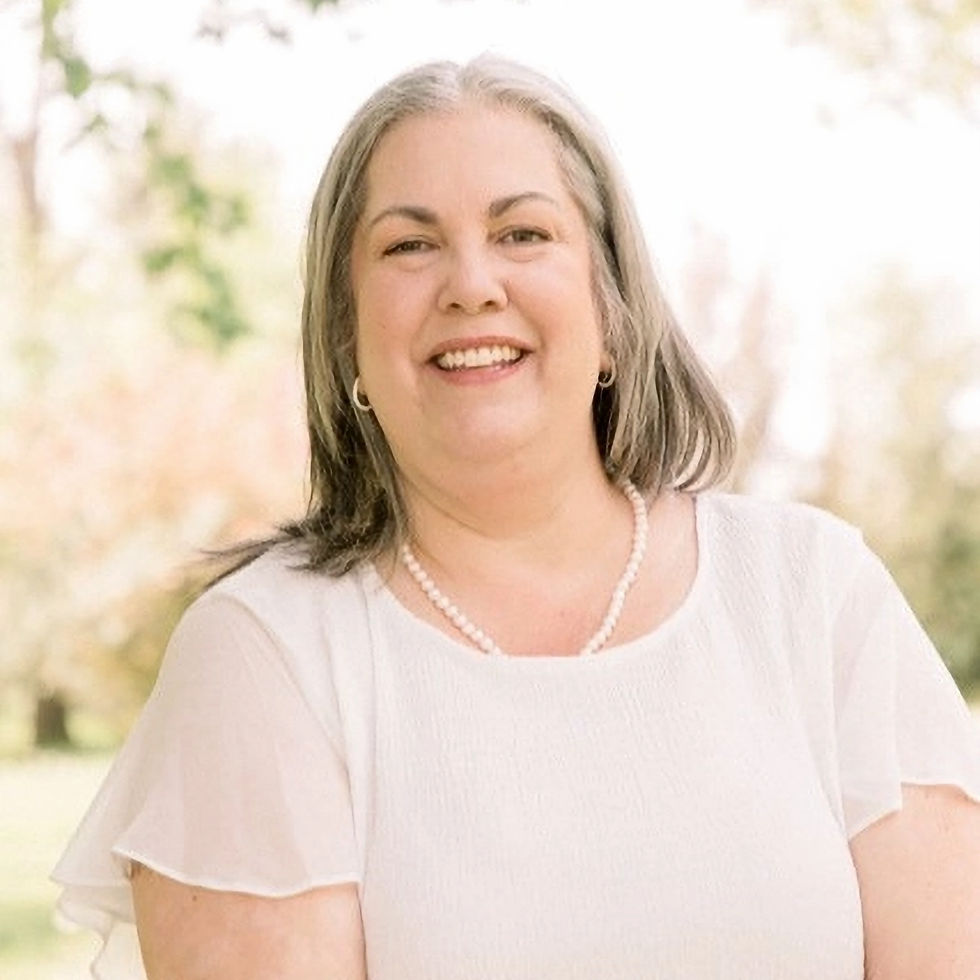
Shannon brings a particularly strong toolkit for women navigating adult ADHD, especially the emotional dysregulation and shame layers that medication does not reach. She is certified in Dialectical Behaviour Therapy, Internal Family Systems for complex trauma, and as a Shame-Informed Treatment Specialist, with a somatic and compassion-focused approach. She works in English and French.
Frequently asked questions (FAQ's)
Can therapy help with ADHD, or do I need medication?
Therapy can help significantly, particularly with the emotional, relational, and self trust work that medication alone does not address. Many of our clients use therapy alongside medication. Some use therapy on its own. A registered Canadian therapist can help you decide what your specific situation actually needs.
How do I get an ADHD diagnosis as an adult in Ontario?
Diagnosis typically requires assessment by a physician, psychiatrist, or qualified psychologist. Your family doctor is usually the first step. Many of our clients begin with therapy first, to clarify what they are experiencing, and then move into formal assessment with the support of their therapist.
Is online therapy effective for ADHD?
Yes, especially for adults with ADHD, where transportation and scheduling barriers can themselves be symptoms. We offer virtual sessions across Ontario, so whether you are searching for a therapist in Toronto, a therapist near you in Mississauga, Brampton, Ottawa, or anywhere else in the province, we can usually accommodate you.
Do you have South Asian or Indian therapists who understand the cultural side of late ADHD diagnosis?
Yes. Our team includes South Asian therapists who speak Hindi, Punjabi, Tamil, Telugu, Malayalam, and Urdu, and who understand the family and cultural dynamics that often shape how ADHD is, and is not, discussed in immigrant households.
How much does therapy cost, and is it covered?
Our sessions are approved by all major Canadian benefit providers. We also offer a free 20 minute consultation so you can clarify fit and coverage before committing
If you recognized yourself in this article
You do not have to figure this out alone, and you do not have to wait until you are certain before reaching out. Many of our clients book their first consultation while they are still asking, am I just making this up? They walk out of that first call with more clarity than they have had in years.
Canadian Therapy offers a free 20 minute consultation with a registered therapist in Ontario, including therapists who specialize in adult ADHD in women, culturally sensitive care, and the specific experience of late diagnosis. We will help you understand whether what you are experiencing is anxiety, burnout, ADHD, or some combination, and what the next step actually looks like
Book your free 20 minute consultation at canadiantherapy.com/book-online


Comments